Why Choose All Animal Feed for Global Sourcing?
Global sourcing decisions affect animal health, production costs, and supply continuity. All animal feed can support different livestock needs through coordinated nutrition, quality control, and supplier management. It may include grains, protein meals, minerals, vitamins, and carefully formulated premixes. Each ingredient should match the species, growth stage, climate, and farm system.
Reliable sourcing begins with evidence. Experienced buyers review feed safety records, ingredient specifications, laboratory results, and production capacity. They also assess storage conditions, transport routes, traceability systems, and emergency response plans. A sealed bag in a dry warehouse tells a useful story. However, it does not prove consistent quality alone. Independent testing and documented inspections remain important.
Local regulations must guide every shipment. Requirements can differ for labeling, additives, contaminants, documentation, and import approval. Professional suppliers understand these differences and communicate them clearly. They should explain limitations, not hide them. That matters.
Choosing all animal feed may simplify procurement, but it is not automatically the best answer for every operation. Freight costs, regional ingredients, seasonal availability, and farm-specific formulas can change the calculation. Buyers should compare total value rather than purchase price alone. A cheaper feed can become expensive when moisture, poor conversion, or delayed delivery affects production.
Strong partnerships grow through transparency and regular review. Request samples, verify certificates, and monitor performance after delivery. Keep records. Adjust formulas when evidence supports change. This practical approach helps global buyers build a safer, more resilient, and more accountable animal feed supply network.
“All animal feed” usually describes a broad sourcing category, not one universal formula. It may include feed for poultry, livestock, aquaculture, and companion animals. Each group needs different nutrients, textures, and safety controls. A dairy ration cannot simply replace fish feed. That assumption causes costly mistakes.
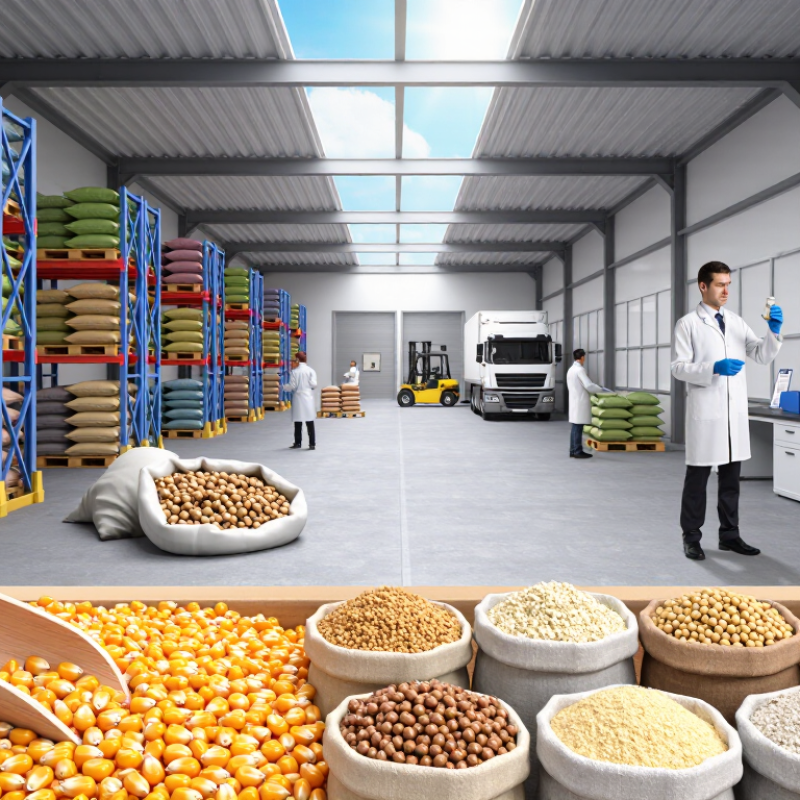
In global sourcing, the term often means access to multiple feed types through one coordinated supply process. Buyers may compare grains, protein sources, vitamins, minerals, premixes, and complete feeds. Reliable suppliers should provide clear specifications, batch records, ingredient origins, and laboratory test results. Moisture levels matter. Storage conditions matter too. A shipment can meet its formula but lose quality through heat, humidity, or poor handling.
Tips: Define the animal species, growth stage, and feeding purpose before requesting prices. Ask for recent certificates and independent test reports. Check packaging strength, production dates, shelf life, and transport conditions. Confirm import requirements in the destination market. Keep samples for comparison when possible. Small checks prevent large surprises.
The word “all” can sound broader than it really is. Product coverage may vary between suppliers and regions. I have found that detailed questions reveal more than attractive catalogs. A practical sourcing plan should balance nutrition, traceability, delivery reliability, and total cost. Price alone is not enough.
Why Choose All Animal Feed for Global Sourcing?
Global animal feed sourcing requires more than competitive pricing. Nutritional consistency supports animal health, production performance, and predictable farm results. Feed should provide suitable energy, protein, fiber, vitamins, and minerals for each species and growth stage. A poultry ration is not suitable for cattle without careful reformulation. Ingredient specifications must state moisture, crude protein, fat, fiber, and mineral levels. These details help buyers compare shipments accurately.
Quality control must continue from harvest to delivery. Suppliers should use documented sampling methods and independent laboratory testing when appropriate. Tests may check moisture, microbial safety, heavy metals, pesticide residues, and unwanted contaminants. Traceability records should identify the origin, batch number, processing date, and storage conditions. Clean warehouses matter. Damp bags can develop mold before anyone notices. Compliance documents should match the destination market’s current requirements. I have seen small record gaps create larger delays than expected.
Tips: Request a recent certificate of analysis for every major feed ingredient. Compare test results with the agreed specification, not only the product label. Check seals, pallet condition, odor, and visible dust during arrival inspections. Keep retained samples for future reference. This step is easy to overlook. Review supplier performance regularly, because one successful shipment does not prove long-term reliability. Slight specification changes should be discussed before production, even when they appear harmless.
| Category | Quality or Nutritional Dimension | Typical Target or Reference Value | Why It Matters for Global Sourcing | Recommended Verification |
|---|---|---|---|---|
| Nutritional Composition | Crude protein | Broiler starter: approximately 21–23% Grower-finisher pig feed: approximately 16–18% Lactating dairy cattle feed: approximately 16–18% |
Protein level affects growth, milk production, feed efficiency, and the suitability of the feed for a specific animal and production stage. | Laboratory analysis using validated methods; compare results with the approved formulation and local feed regulations. |
| Nutritional Composition | Energy density | Must be declared or calculated according to species-specific systems, such as ME for poultry and NE for swine or dairy cattle. | Energy concentration influences daily intake, weight gain, egg production, milk yield, and overall feed conversion. | Check formulation calculations, ingredient specifications, and laboratory or near-infrared analysis where applicable. |
| Nutritional Composition | Calcium and available phosphorus | Layer diets commonly contain approximately 3.8–4.2% calcium; exact levels depend on age, production stage, and phosphorus availability. | Proper mineral balance supports bone development, eggshell quality, fertility, and animal performance while reducing excessive mineral excretion. | Verify calcium, total phosphorus, and available or digestible phosphorus through laboratory testing and formulation review. |
| Physical Quality | Moisture content | A commercial target of ≤12% is commonly used for many dry feeds, although product specifications and legal limits vary. | Excess moisture increases the risk of mold growth, caking, nutrient deterioration, and reduced storage stability during international transportation. | Test every production lot or follow a risk-based sampling plan; inspect packaging, warehouse conditions, and container humidity control. |
| Physical Quality | Pellet durability and fines | A Pellet Durability Index of approximately ≥90% is often specified for durable pelleted feed; acceptable fines depend on species and application. | Good pellet integrity reduces segregation, dust, feed waste, and nutrient variation between the factory and the animal’s feeding point. | Use a recognized pellet durability test and define maximum fines, pellet size, bulk density, and breakage limits in the purchase specification. |
| Food Safety | Aflatoxin B1 and other mycotoxins | Aflatoxin B1 limits differ by country, animal species, and feed type. A limit of 20 µg/kg is used in some international regulations for certain feed materials. | Mycotoxins can reduce animal performance, damage organs, impair immunity, and create residues or carry-over risks in animal products. | Conduct risk-based sampling using representative composite samples; use validated laboratory methods and confirm destination-country limits. |
| Food Safety | Salmonella and pathogenic microorganisms | “Absent in 25 g” is a common buyer specification for Salmonella, but requirements vary across jurisdictions and feed categories. | Microbiological contamination can cause animal disease, production losses, and potential transmission through the food chain. | Apply HACCP-based controls, heat-treatment verification, environmental monitoring, and accredited microbiological testing. |
| Chemical Safety | Heavy metals, pesticides, and prohibited substances | Must comply with the maximum limits and prohibited-substance lists of the importing country and intended animal species. | Contaminants may accumulate in animals or animal products and can result in rejected shipments, recalls, or regulatory action. | Review supplier declarations, conduct periodic multi-residue testing, and retain certificates of analysis for high-risk ingredients. |
| Traceability | Lot identification and supply-chain records | Each shipment should have a unique lot code linked to ingredients, production date, formulation, test results, packaging, and delivery records. | Reliable traceability enables rapid investigation, targeted recalls, origin verification, and consistent quality across international supply chains. | Audit one-step-back and one-step-forward records in line with Codex food-chain traceability principles and applicable national requirements. |
| Management System | HACCP, GMP, and feed-safety controls | A documented hazard-control system should cover receiving, storage, batching, processing, packaging, transport, and corrective actions. | Preventive systems reduce contamination and formulation errors more effectively than relying only on finished-product testing. | Review internal audits, corrective-action records, calibration records, sanitation programs, and relevant feed-safety certifications. |
| Storage and Logistics | Shelf life and transport stability | Shelf life must be supported by product-specific stability data; dry feed commonly requires protection from moisture, heat, pests, and direct sunlight. | Long-distance shipping can expose feed to condensation, temperature variation, infestation, and nutrient degradation. | Specify packaging performance, storage temperature and humidity, first-expired-first-out procedures, container inspection, and arrival-condition checks. |
Why Choose All Animal Feed for Global Sourcing?
All Animal Feed can support international supply chains by offering a broader, coordinated sourcing structure. Buyers can manage grains, protein meals, minerals, and feed additives through clearer procurement plans. This reduces repeated negotiations across multiple suppliers. It may also simplify shipment scheduling and inventory control.
Reliable supply depends on more than product availability. Each shipment should match agreed specifications for moisture, protein, particle size, packaging, and shelf life. Export documents must remain accurate and consistent. Batch records, laboratory results, and loading photographs improve traceability. In practice, port congestion, weather, and changing harvest conditions can still interrupt delivery. No plan is flawless. A strong supplier should communicate delays early and offer practical alternatives, such as adjusted shipment dates or approved substitute materials. Buyers should verify local feed regulations before ordering, because requirements differ between markets.
Tips: Request a sample before contracting. Compare test results with the written specification. Check packaging strength for humid routes. Keep safety stock for critical ingredients. Review supplier performance after every shipment. Small details matter.
Cost should not be the only measure of value. A low quotation may hide higher inspection, storage, or demurrage expenses. Experienced sourcing teams assess consistency, documentation quality, response time, and contingency planning together. All Animal Feed is most useful when it supports dependable coordination, not merely a larger product list.
Why Choose All Animal Feed for Global Sourcing?
Global sourcing of animal feed requires more than comparing prices. A 2024 global feed-industry survey estimated 1.29 billion metric tons of compound feed production in 2023. That scale makes supplier reliability a commercial necessity. Buyers should examine ingredient traceability, species-specific nutrition, production capacity, and delivery performance. Can the supplier identify each batch back to its origin? Can it maintain formulation accuracy when raw materials change?
Evidence matters more than polished claims. Request recent certificates, laboratory results, contaminant-control procedures, and recall records. Suppliers should demonstrate alignment with Codex food safety principles and recognized feed-safety systems, such as ISO 22000-based programs. Independent testing should cover mycotoxins, heavy metals, pathogens, and moisture. A clean certificate is useful. It is not the whole story.
Look closely at operational details. Visit a facility, if practical, and inspect covered storage, pest controls, weighing equipment, and batch labels. Ask how quickly the supplier reports deviations. The OECD-FAO Agricultural Outlook 2024–2033 links expanding livestock production with continuing demand for feed inputs, increasing pressure on supply chains. A low quoted price may hide longer transit times, inconsistent quality, or weak contingency planning. No scorecard is perfect. Weather can expose assumptions. I would also compare communication habits, because a delayed warning can cost more than a higher invoice.
Global sourcing of animal feed requires more than comparing prices. Each shipment should match the destination country’s rules for ingredients, labeling, additives, and veterinary controls. Requirements can differ sharply between regions. A compliant product in one market may need new documentation elsewhere. Importers should verify supplier registrations, product specifications, certificates of analysis, and traceability records before purchase. Batch numbers must connect the finished feed to its ingredient sources. That detail matters during a recall.
Safety checks should address aflatoxins, heavy metals, pathogens, pesticides, and unwanted residues. Sampling plans need clear frequencies and independent laboratory testing. Storage conditions also deserve attention. Damp warehouses can damage feed within days. Sealed bags, raised pallets, ventilation, and pest controls reduce practical risks. Digital records help, but paper backups remain useful when systems fail. No supplier is perfect. A strong review should identify weaknesses instead of hiding them.
Sustainability adds another layer. Buyers can request information about land use, water consumption, energy use, packaging, and transport distances. Local or regional ingredients may reduce emissions, but not always. Poor farming practices can outweigh shorter shipping routes. Responsible sourcing also considers worker welfare and animal nutrition, not only carbon figures. Supplier audits should include corrective actions, deadlines, and follow-up evidence. A checklist alone is insufficient. Real performance requires repeated verification, transparent communication, and a willingness to reject convenient claims without reliable proof.