What Is the Best Poultry Feed Supplier in China?

Choosing the best poultry feed supplier in China requires more than comparing prices and product photos. Farms need feed that supports steady growth, healthy digestion, and reliable flock performance. A supplier may offer broiler, layer, or breeder formulas, but suitability depends on age, breed, climate, and management conditions.

From practical sourcing experience, responsible buyers should examine ingredient specifications, batch consistency, laboratory testing, and production controls. Clear labels matter. So do traceable raw materials. A professional supplier should explain protein levels, energy values, additives, storage requirements, and recommended feeding stages without vague promises. Factory visits can reveal important details, including clean storage areas, sealed packaging, and organized quality records. These small signs often matter more than polished marketing.

Still, no supplier is perfect. A strong evaluation should include communication speed, customization ability, export experience, and after-sales support. Ask for recent test reports and representative samples before making a large purchase. Results from one farm may not match another. That is easy to overlook. Weather, water quality, housing, and disease prevention can change feed performance significantly. Buyers should also confirm shipping arrangements, documentation, and compliance with destination-market requirements. This article compares key supplier criteria and explains how to identify dependable poultry feed manufacturers in China. The goal is not to promote the cheapest option, but to find a transparent partner whose products remain consistent when real farm conditions become demanding.
What Is the Best Poultry Feed Supplier in China?

What Makes a Poultry Feed Supplier in China the Best Choice?

What Makes a Poultry Feed Supplier in China the Best Choice?

China’s poultry industry needs more than low feed prices. It needs stable nutrition, reliable delivery, and visible quality controls. China’s industrial feed output exceeded 320 million metric tons in 2023, according to China Feed Industry Association statistics. This scale makes supplier consistency especially important. A strong supplier should provide batch records, ingredient origins, laboratory results, and clear storage instructions. Small details matter, such as sealed sample bags and moisture checks before loading.

Independent testing also deserves attention. The Alltech Agri-Food Outlook 2024 estimated global feed production at 1.126 billion metric tons in 2023. Such volume increases pressure on mills to control mycotoxins, contamination risks, and formulation errors. A professional Chinese supplier should test raw materials, monitor mixing uniformity, and verify amino acid levels. Buyers should request recent certificates of analysis, not only attractive product brochures. Practical experience suggests that a supplier’s response during a delayed shipment can reveal more than its sales presentation.

Traceability is essential. Ask whether each batch can be linked to a production date, formula, and responsible quality manager. Good suppliers also adjust formulations for broilers, layers, climate, and farm housing conditions. Not every supplier will offer perfect results. Feed performance can change with water quality, flock health, and management. That limitation deserves honest discussion. A dependable supplier shares trial data, admits uncertainty, and supports controlled farm testing before large orders. Reliability is built through evidence, communication, and repeated performance.

How to Evaluate Poultry Feed Quality and Safety Standards

What Is the Best Poultry Feed Supplier in China?

How to Evaluate Poultry Feed Quality and Safety Standards

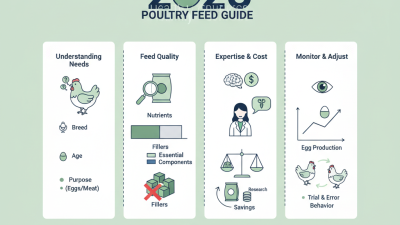
Choosing a poultry feed supplier requires more than comparing prices. A reliable supplier should provide clear ingredient specifications, recent laboratory reports, and complete batch traceability. Ask for the feed’s moisture, protein, fat, fiber, calcium, and phosphorus levels. These figures should match the product label and your birds’ growth stage.

Safety testing deserves close attention. Request evidence of screening for Salmonella, aflatoxins, heavy metals, and pesticide residues. The testing laboratory should use recognized methods and identify the sample date. A clean-looking pellet proves very little. Inspect the packaging for tears, dampness, strange odors, or excessive powder. Feed should be stored on raised pallets, away from walls and direct sunlight. Small details matter.

Consistency is equally important. Compare several batch reports instead of trusting one impressive result. During a farm visit, observe raw-material storage, pest control, mixing records, and cleaning procedures. Ask how complaints are investigated and how affected batches are recalled. A qualified nutritionist or veterinarian can review the formula for your local climate and flock conditions. I have seen buyers focus on protein percentages while overlooking moisture and storage damage. That judgment needs reconsideration. Laboratory data may also miss problems caused during transport. Keep retained samples, record bird performance, and check feed conversion after each delivery. Good suppliers welcome these questions. Reliable evidence beats confident promises.

Which Types of Poultry Feed Do Chinese Suppliers Provide?

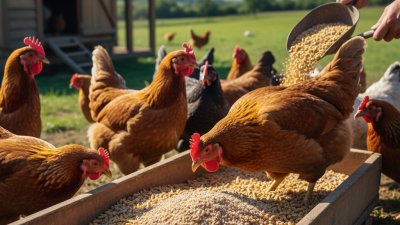
Chinese poultry-feed suppliers provide more than one standard formula. They commonly offer broiler starter, grower, and finisher feed, plus layer feed for different laying stages. Breeder, duck, goose, quail, and native-chicken formulas are also widely available. Feed may come as pellets, mash, or crumbles. Premixes and concentrates help farms adjust corn, soybean meal, and local grain ratios.

The China Feed Industry Association reported industrial feed production above 320 million tonnes in 2023. Poultry feed contributed roughly 135 million tonnes, showing the scale of this segment. Alltech’s 2024 Agri-Food Outlook recorded global feed production at about 1.13 billion tonnes. Poultry remained the largest animal-feed category worldwide. These figures support a practical point: Chinese suppliers often have strong formulation experience, but quality still varies between factories. Some products look similar on paper.

Tips: Ask for a recent laboratory report, ingredient specification, and production date. Check crude protein, lysine, methionine, calcium, phosphorus, and energy values. Mycotoxin screening matters, especially during humid storage. Request samples from the same production batch. A low price can hide weaker amino-acid balance or inconsistent pellet durability. I would also compare feed conversion results on a small farm trial, rather than trusting a brochure alone. Temperature, water quality, and bird genetics can change the result.

How to Verify Supplier Capacity, Certifications, and Reliability

What Is the Best Poultry Feed Supplier in China?

How to Verify Supplier Capacity, Certifications, and Reliability

Supplier scale should be tested with records, not factory size alone. The 2023 China Feed Industry Annual Report recorded 321.6 million tonnes of industrial feed output nationwide. This figure shows a large market, but it does not prove consistent quality. Request production licenses, monthly output records, line capacity, warehouse photographs, and peak-season delivery data. Compare claimed capacity with electricity use, staffing, and raw material purchasing. Numbers can mislead.

Certification checks require careful detail. Verify the certificate number, issuing body, expiry date, factory address, and approved production scope. Useful evidence may include HACCP, ISO 22000, or other recognized feed-safety systems. These certificates support control procedures, but they do not replace product testing. Ask for recent batch records and certificates of analysis covering moisture, crude protein, mycotoxins, and Salmonella. Independent laboratories accredited to ISO/IEC 17025 provide stronger evidence. Check retained samples when possible.

Reliability appears during problems. Ask how the supplier handles rejected batches, delayed vessels, formula changes, and raw material shortages. Request three customer references with similar poultry operations. A small trial order can test packaging, delivery accuracy, and laboratory consistency. Visit the facility, but do not rely on a polished tour. Inspect weighing systems, traceability labels, pest controls, and sample storage. I would also compare twelve months of test results, because one excellent batch proves very little. That uncomfortable gap deserves attention.

What Is the Best Poultry Feed Supplier in China? — How to Verify Supplier Capacity, Certifications, and Reliability
Evaluation Dimension Measurable Indicator Documents or Evidence to Request Recommended Verification Method Practical Screening Benchmark
Manufacturing Capacity Installed production capacity, number of production lines, and actual annual output Production-line list, equipment specifications, recent production records, and capacity statement signed by an authorized representative Compare rated capacity with historical output and confirm that the facility can support the required order volume without excessive outsourcing Capacity should normally exceed the buyer’s projected annual demand and seasonal peak requirement
Capacity Availability Available monthly capacity during peak poultry production periods Monthly production plan, current order-book summary, lead-time commitment, and shipment history Request a written supply plan for peak months and confirm whether raw-material shortages or maintenance shutdowns affect delivery The supplier should demonstrate reserve capacity for forecast changes and urgent replenishment
Regulatory Compliance Legal manufacturing registration and compliance with applicable Chinese feed regulations Current manufacturing license, product approvals where applicable, inspection records, and regulatory compliance documents Check document validity, registered production scope, factory address, product categories, and issuing authority All licenses must be current and cover the actual manufacturing site and requested poultry-feed category
Food and Feed Safety System Hazard analysis, critical control points, sanitation controls, and foreign-material prevention HACCP plan, prerequisite programs, sanitation procedures, pest-control records, and metal-detector or sieve-control records Review the latest internal and external audit findings and confirm corrective actions for any major nonconformity A documented and actively implemented safety system should cover receiving, storage, processing, testing, and dispatch
Quality Management Consistency of nutritional specifications and batch-to-batch quality Quality manual, product specifications, batch test results, retained-sample procedure, and calibration records Compare several recent batches for moisture, crude protein, crude fat, fiber, ash, calcium, phosphorus, and other agreed specifications Results should remain within the contractual specification limits across multiple consecutive batches
Certification Validity Scope, validity period, issuing body, and covered production site of each certificate Valid certificates for quality management, feed safety, or other relevant systems, including audit scope and certificate number Verify the certificate through the issuing or accreditation body whenever an online verification service is available The certificate must be unexpired, site-specific, and relevant to poultry-feed manufacturing rather than only trading activity
Raw-Material Control Supplier approval, incoming inspection, storage conditions, and traceability of ingredients Approved-supplier list, incoming inspection records, storage maps, allergen or contamination controls, and raw-material test reports Select random ingredients and trace them from receiving records through a finished-feed batch Critical ingredients should have documented acceptance criteria and lot-level traceability
Laboratory Capability Testing capability for nutritional parameters, microbiological risks, toxins, and contaminants Laboratory equipment list, staff qualifications, test methods, calibration certificates, and external-laboratory agreements Confirm which tests are performed internally and which are subcontracted; review recent proficiency or comparison-test records Routine release testing should be supported by calibrated equipment and qualified personnel
Product Traceability Ability to trace one finished batch to ingredients, processing records, test results, and customers Batch-coding rules, production records, warehouse records, dispatch documents, and mock-recall report Conduct a traceability exercise using a randomly selected batch and measure the time required to retrieve all related records The supplier should be able to identify affected lots and distribution records promptly during a recall simulation
Delivery Reliability On-time shipment rate, average lead time, and order-fulfillment accuracy Anonymized delivery statistics, shipment records, customer-service procedure, and agreed service-level terms Compare promised and actual delivery dates across recent orders and contact independent trade references when available A reliable supplier should show stable lead times and a documented process for handling delays or shortages
Packaging and Shelf Life Packaging integrity, labeling accuracy, storage requirements, and stated shelf life Packaging specifications, label artwork, shelf-life validation, pallet requirements, and warehouse-condition records Inspect packaging samples and confirm that labels include batch identification, production date, net weight, storage guidance, and required declarations Packaging should protect feed from moisture, contamination, and physical damage throughout transport and storage
Commercial Transparency Clarity of formula scope, pricing basis, minimum order quantity, payment terms, and change-control rules Formal quotation, product specification, pro forma invoice, contract draft, and change-notification procedure Check that all technical and commercial terms are consistent across the quotation, specification, label, and contract No material ingredient, specification, packaging, or delivery change should occur without prior written approval
After-Sales Responsiveness Complaint response time, investigation process, corrective-action procedure, and technical support Complaint-handling procedure, response-time commitment, corrective-action template, and technical-support contact structure Submit a sample technical inquiry and evaluate response quality, evidence provided, and time to resolution The supplier should provide a documented response and root-cause process for quality or delivery complaints
Financial and Operational Stability Business continuity, ownership of the manufacturing site, workforce stability, and contingency planning Business registration information, facility ownership or lease evidence, continuity plan, backup utilities, and insurance information Assess whether the supplier can maintain production during equipment failure, raw-material disruption, power interruption, or transport delays A credible supplier should have documented contingency arrangements and clear escalation contacts
Screening guidance: No single certificate proves overall supplier reliability. The strongest evaluation combines current regulatory documents, an on-site or live video audit, independent laboratory results, batch traceability, delivery history, and a verified trial order.

How to Compare Prices, Logistics, and After-Sales Support

What Is the Best Poultry Feed Supplier in China?

Price comparison should begin with the delivered cost, not the factory quote. Alltech’s 2024 Agri-Food Outlook recorded global feed production at 1.126 billion metric tons in 2023. This scale makes small price differences meaningful, but cheaper feed may involve weaker formulation control or higher inland freight. Request a complete quotation covering ingredients, additives, packaging, loading, insurance, and destination charges. Ask for recent laboratory results, including moisture, protein, and mycotoxin screening. Good suppliers explain variation clearly.

Logistics deserves equal attention. The World Bank’s 2023 Logistics Performance Index assessed 139 economies across customs, infrastructure, and delivery reliability. Use its findings as context, not as a supplier guarantee. Compare port options, sailing schedules, container limits, and document accuracy. A practical test is simple: request a shipment plan for one full container. It should show production time, inspection timing, estimated departure, and contingency arrangements. Vague dates are costly.

After-sales support becomes visible when something goes wrong. Choose a supplier that provides a named technical contact, batch traceability, storage guidance, and a written complaint procedure. FAO reports consistently stress feed safety management and contamination control across the supply chain. Ask how retained samples are stored and how claims are investigated. I would also test communication before signing. Send difficult questions. Measure response quality, not friendliness. No supplier is perfect. My own comparison could still miss hidden port delays or local feed performance, so a controlled trial shipment remains wiser than a large first order.